• Skip to main content
  • Skip to header right navigation
  • Skip to after header navigation
  • Skip to site footer
eco life logo

Eco Life Zone

Green living for a sustainable eco based future

  • About
  • Sustainability
    • Eco-Friendly Homes
      • Energy Efficiency
      • Solar Power Systems
      • Water Conservation
      • Wind Turbines
    • Sustainable Transportation
      • Biking
      • Electric and Hybrid Cars
      • Public Transport
      • Walking and Pedestrian-Friendly Initiatives
    • Zero Waste Lifestyle
      • Composting
      • Recycling
      • Reducing Single-Use Plastics
      • Sustainable Packaging
  • Green Living
    • Natural Health
      • Ethical Fashion
      • Herbal Remedies
      • Holistic Wellness Practices
      • Nutrition and Whole Foods
    • Organic Gardening
      • Permaculture
      • Urban Gardening
  • Travel
    • Eco-Friendly Destinations
      • Eco-Lodges
      • National Parks and Reserves
    • Low Impact Travel
      • Carbon Offsetting
      • Packing Light
    • Responsible Travel
      • Ethical Animal Tourism
      • Voluntourism
  • Contact
  • Jobs
  • Learn More

Sustainable Transportation

Introduction to Sustainable Transportation

sustainable transportSustainable transportation is a key element of the transition towards a greener, healthier, and more livable planet. The profound concept revolves around modes of transportation that strive to limit environmental impact while providing effective mobility for people and goods. Introduction to sustainable transportation involves examining the elements that constitute a sustainable transportation system, including fuel efficiency, the use of renewable energy, reduction of carbon emissions, and improving air quality. A sustainable transportation system incorporates a variety of transport modes such as walking, cycling, public transportation, electric vehicles, and other low-emission modes of transport, all playing pivotal roles in urban development and mobility.

Addressing the issue of sustainability in transportation requires transforming our transport systems and prioritizing environmentally friendly modes of transportation. The goal is to reduce greenhouse gas emissions from transport, enhance energy efficiency, and lessen our reliance on fossil fuels. Adopting sustainable transportation can offer benefits such as reduced traffic congestion, improved air quality, lower carbon dioxide levels, and a decreased reliance on internal combustion engines. Therefore, creating an efficient transport system that operates within the Environmental Protection Agency’s guidelines gives room for society to breathe easier and live longer.

Key developments towards this goal include:

  • Enhancing public transportation systems, which results in lower emissions per passenger mile in comparison to individual motor vehicle travel.
  • Encouraging walking and cycling, thus adopting more active, healthier lifestyles while also contributing to improved urban air quality.
  • Promoting the use of electric vehicles (including electric trucks and plug-in hybrid vehicles) supported by a widespread network of charging stations.
  • Prudent urban planning that embeds sustainable urban mobility principles, incorporating infrastructure for walking, cycling, and public transit.
  • Greening the transportation infrastructure using innovations in sustainable public transportation and sustainable urban development principles. 

By the year 2050, the aim is to establish well-planned and efficient transport systems in cities around the world that prioritize not just mobility, but also social equity and environmental sustainability, with a significant reduction in global greenhouse gas emissions. Achieving these targets will rely heavily on political will, technological advancements, commitment from developed countries, and a global shift towards valuing sustainability as a driving force for societal development. So as we journey towards 2023 and beyond, it is important to remember that sustainable transport isn’t just a concept or a distant goal, but an urgent necessity to protect the state of the environment we live in.

Understanding Sustainability in Transport

Understanding sustainability in transport is a critical aspect of combating global climate change and improving the quality of life across the nation’s varied urban and suburban landscapes. Road transport, particularly in congested urban areas, is a significant contributor to global CO2 emissions, accounting for a considerable portion of the outdoor air pollution affecting many of our cities. This calls for increased attention toward sustainable transport systems that place considerable emphasis on clean transportation methods, reducing emissions and effectively improving urban air quality.

For example, a dependency on private commuter vehicles can lead to an increase in both congestion and air pollution in densely populated areas. A shift toward sustainable modes of transportation, such as walking, using a bicycle, or leveraging public transit systems, can remarkably diminish environmental burdens. Such initiatives can also be shaped by the following measures:

  • Promoting public transport, which lessens the number of vehicles on the road, reducing CO2 emissions and ultimately leading us towards sustainable cities.
  • Developing sustainable transportation infrastructure, like biking paths, accessible pedestrian areas, and charging stations for plug-in hybrid electric vehicles, fostering sustainable mobility.
  • Encouraging the use of sustainable forms of transportation, such as trains, which provide a more energy-efficient transport option for long-distance commuters. 

The International Energy Agency and the Department of Energy include train travel as a part of their sustainable development strategies due to its significantly lower emission levels compared to other forms of transportation. With a concerted effort, these sustainable transport systems can provide an effective means of achieving environmental protection agency targets, reducing fuel costs, and fostering greener transportation systems, ultimately making transport sustainable. By reducing noise and air pollution and creating millions of jobs, sustainable infrastructure plays a crucial role in propelling the shift from mobility to sustainable, healthier lifestyles.

The Role of Sustainable Vehicles in Global Climate

The role of sustainable vehicles in global climate change mitigation is unanimously pivotal within the realm of urban transportation. Essentially, they form the cornerstone of sustainable mobility, proactively tackling the gamut of environmental issues. These vehicles, which utilize cleaner energy sources and aim to minimize noise or air pollution, have a transformative impact on transport infrastructure. They offer the promise of creating sustainable cities while enabling safer, healthier transport for people. It’s through the lens of these vehicles that we conceive a future transportation landscape devoid of negative environmental impacts but also primed for economic growth.

Remarkably, the shift towards sustainable vehicles is set to create millions of jobs worldwide, an economic advantage that goes hand in hand with their environmentally friendly qualities. Sustainable vehicles play a significant role in efforts to reduce global greenhouse gas emissions. This contribution to the mitigation of climate change falls under several sub-categories:

  • Reduction in energy wastage: The enhanced efficiency of these vehicles translates into energy conservation, significantly reducing related emissions.
  • Lower pollution levels: Sustainable vehicles drastically cut down noise and air pollution, creating healthier, more pleasant urban environments.
  • Enhanced recyclability: The emphasis on more eco-friendly materials in their construction promotes better recycling practices.

As well as the environmental aspects, the social and economic implications of sustainable vehicle adoption are profound. It’s more than a single change in technology; it represents a comprehensive transformation of how we perceive and utilize transportation in our daily lives.

Urban Development and Transportation Research: A Sustainable Approach

Urban development and transportation research pave the way for sustainable city planning, offering solutions with a holistic view that acknowledges contemporary societal needs while ensuring the longevity of cities’ infrastructures and ecosystems. Focused on integrating social, economic, and environmental factors, this budding field takes into account the complexity of metropolitan life, recognizing that cities are living, evolving organisms. This comprehensive approach dictates that long-term strategies must abide by certain sustainable criteria, such as:

  • Reduced greenhouse gas emissions,
  • Improvement of public spaces,
  • Job creation (potentially generating a myriad of ‘million jobs’),
  • Efficient use of resources,
  • And promotion of social equity.

In juxtaposition with the urban development aspect, transportation research investigates the various implications of city transport and innovative systems aimed at minimizing distress on both inhabitants and the environment. Bringing into the fold safe, efficient, and sustainable modes of transport, transportation research becomes instrumental in formulating effective solutions.

The approach posits that careful planning and improvements in policy, technology, and practices can lead to significant benefits, including but not limited to amplified efficiency, amplified safety, and widespread transit accessibility. It is crucial to comprehend that the blend of urban development and transportation research is not mutually exclusive but symbiotic—each informs the other in the quest for sustainable urban living.

Conclusion

In conclusion, the robust economic strategies implemented have significantly impacted the job market, resulting in the creation of a million jobs. This exponential growth reflects the effectiveness of these policies in stimulating socio-economic development. This has helped mitigate the unemployment rate and improve the overall quality of life for many.

The successful provision of this substantial number of employment opportunities has not only bolstered the economy but has also played a momentous role in building self-reliance and resilience among individuals. It has fostered an atmosphere of empowerment, giving people the tools required to realize their potential and contribute more productively to society. 

Moreover, it has demonstrated how strategic planning and decision-making can drive remarkable change, even in fields as complex and volatile as the job market. The creation of a million jobs stands as a testament to the potential of well-focused, inclusive economic policies. Therefore, it’s pivotal to continue adapting and incorporating proven strategies to sustain this positive trajectory, fostering growth and stability in the employment sector.

FAQ’s:

1. Q: What is sustainable transportation?

   A: Sustainable transportation refers to the broad subject of transport that is sustainable in the sense of social, environmental, and climate impacts. In essence, it is transportation that does not compromise the mobility and accessibility of future generations.

2. Q: How is sustainable transportation related to job creation?

   A: The move towards sustainable transportation can indeed help to create employment opportunities. For example, the pursuit of sustainable transportation strategies can lead to the growth of green industries, potentially creating millions of jobs. 

3. Q: Can sustainable transportation contribute to the economy?

   A: Absolutely, sustainable transportation can greatly contribute to the economy. This area presents vast opportunities for job creation, potentially leading to the creation of a significant number of million jobs in fields such as infrastructure construction, vehicle production, and maintenance services.

4. Q: What are the environmental benefits of sustainable transportation?

   A: Sustainable transportation has numerous environmental benefits. For instance, it helps to reduce greenhouse gas emissions, thereby aiding in the fight against climate change. It also leads to decreased air and noise pollution, benefiting urban environments and the people who live in them.

5. Q: How can sustainable transportation impact urban planning?

   A: Sustainable transportation can have a significant impact on urban planning. It can inspire the creation of cities where public transit, cycling, and walking are the preferred modes of transport. These changes can lead to more jobs, potentially millions, in urban development and city planning sectors.

6. Q: What are the social benefits of sustainable transportation?

   A: Sustainable transportation has various social benefits. It can increase accessibility for all individuals, contribute to healthier communities by promoting active transportation such as walking and cycling, and create numerous employment opportunities, potentially even millions of jobs in the sector.

7. Q: How does sustainable transportation affect us personally?

   A: Sustainable transportation has multiple personal benefits. It can help reduce our individual carbon footprints, potentially save costs associated with vehicle ownership and maintenance, and provide us with opportunities for physical activity. Additionally, the job growth in sustainable transportation industries could lead to millions of jobs, offering new career opportunities.

International Examples Of Pedestrian-Friendly Cities

International Examples Of Pedestrian-Friendly Cities | Lessons For Global Sustainability

December 7, 2023 by webmaster

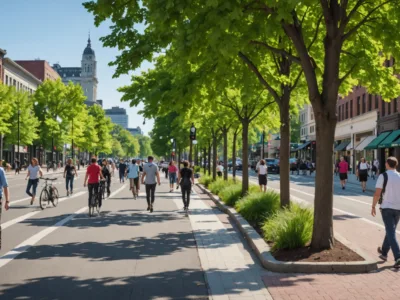
Introduction to Pedestrian-Friendly Cities and Global Sustainability Introduction to Pedestrian-Friendly Cities and Global Sustainability centers fundamentally on a shift in urban planning and design that fosters sustainability. As we observe cities around the world, a noticeable trend towards “sustainable cities” characterized by walkability, cycle-friendly routes as well and the effective integration of public transport systems …
Read moreInternational Examples Of Pedestrian-Friendly Cities | Lessons For Global Sustainability
Pedestrian-Friendly Policies | How Cities Can Prioritize Walking

Pedestrian-Friendly Policies | How Cities Can Prioritize Walking

December 7, 2023 by webmaster

Introduction to Pedestrian-Friendly Policies Introduction to pedestrian-friendly policies is a crucial aspect in shaping modern urban environments. At the core of these policies is the focus on encouraging walking and promoting a more sustainable mobility culture in urban areas. Pedestrian-friendly policies recognize that walkability, as a concept, extends beyond just the mere ability to walk. …

Read morePedestrian-Friendly Policies | How Cities Can Prioritize Walking

Pedestrian-Friendly Tourism: Exploring Cities on Foot for Sustainable Travel

December 7, 2023 by webmaster

Understanding the Concept of Eco-Tourism You’ve probably heard the phrase “eco-tourism” buzzing around travel circles, but what does it really mean? Simply put, it’s the fusion of environmental responsibility with travel. Eco-tourism aims to promote sustainable practices that minimize the overall impact of tours and travels on the environment. It encourages tourists to be more …

Read morePedestrian-Friendly Tourism: Exploring Cities on Foot for Sustainable Travel
the role of walkable neighborhoods

The Role Of Walkable Neighborhoods In Reducing Traffic Congestion

December 7, 2023 by webmaster

The Concept of Walkable Neighborhoods The concept of walkable neighborhoods revolves around designing urban spaces that encourage walking by offering safety, convenience, and recreational opportunities while reducing the need for vehicle use. The essential characteristic of a walkable neighborhood is that it enhances the quality of life for residents, by providing more opportunities for physical …

Read moreThe Role Of Walkable Neighborhoods In Reducing Traffic Congestion
walking to work

Walking To Work | Commuting Sustainably For A Greener Future

December 7, 2023 by webmaster

Introduction to Sustainable Commuting for a Greener Future In our current era, the concept of sustainable commuting stands as a vital pillar for fostering a greener future. Embracing environmentally conscious commuting methods not only aids in substantially decreasing our carbon footprint but also does wonders in enhancing our physical and mental well-being. One cannot undermine …

Read moreWalking To Work | Commuting Sustainably For A Greener Future

Green Streets | Incorporating Nature And Sustainability Into Pedestrian Spaces

December 7, 2023 by webmaster

Introduction to Green Streets Green streets represent an innovative approach towards urban infrastructure, integrating environmental sustainability into the very fabric of our communities. These dynamic configurations seek to transform the urban street into a catalyst for sustainable development. Make no mistake; a green street is not merely about aesthetics or the inclusion of vegetation. It’s …

Read moreGreen Streets | Incorporating Nature And Sustainability Into Pedestrian Spaces

The Concept of Walkability in Urban Planning

December 7, 2023 by webmaster

Urban Design Strategies for Creating Pedestrian-Friendly Environments Creating pedestrian-friendly environments in urban settings is a critical consideration in urban design strategies. The primary aim is to shift focus from car-centric designs towards more comprehensive urban layouts that facilitate and encourage people to walk. The benefits of walkable cities are manifold, extending to improved public health, …

Read moreThe Concept of Walkability in Urban Planning
encouraging walking as a daily habit

Promoting Active Transportation | Encouraging Walking As A Daily Habit

December 7, 2023 by webmaster

Introduction to Active Transportation Active transportation is an essential aspect of our daily lives, contributing significantly to public health and the functionality of our transportation system. When we discuss active transportation, we’re referring to any form of human-powered transportation – primarily walking and cycling. However, this can also encompass other modes of travel like skateboarding, …

Read morePromoting Active Transportation | Encouraging Walking As A Daily Habit
the benefits of walking

The Benefits Of Walking | A Sustainable And Healthy Mode Of Transportation

December 7, 2023 by webmaster

Introduction to Sustainable Transportation Sustainable transportation is an evolving viewpoint towards attaining mobility in a manner that is more harmonious with our physical environment and the health and well-being of the population. Over recent years, we’ve witnessed a shift in transportation systems towards more sustainable modes – an example of sustainable transportation trends that have …

Read moreThe Benefits Of Walking | A Sustainable And Healthy Mode Of Transportation
  • Page 1
  • Page 2
  • Page 3
  • Page 4
  • Next

Embrace The Future NOW!

Where eco-sustainability is not just a concept, but a proactive commitment to a healthier planet for future generations.

Learn More
Eco Life Zone

Growing Greener, Living Cleaner: Your Journey to Sustainability.

555-864-2258

info@ecolife.zone

Sitemap
  • Home
  • Sitemap
  • About Us
  • Blog
  • Contact
Sustainable Life Insights

Dive into a our knowledge. Engaging and informative content on the dynamic world of sustainable and eco-friendly living.

Read More

Copyright © 2008 EcoLife.zone | All Rights Reserved.